ALDBROUGH CORN MILL – Rare Regency Yorkshire Broadside Advertising the Sale by Auction of the Historic Aldbrough Windmill – Hull, 1818
£225.00[CUTHBERT, Robert.] Johnson, Anthony & Peck, Robert
(IRELAND) Autograph Note Signed (“Argyll”) concerning the Tipperary Trials and Irish Government policy – Inveraray – 28 September 1890
£95.00ARGYLL, George Douglas Campbell, 8th Duke of Argyll (1823–1900)
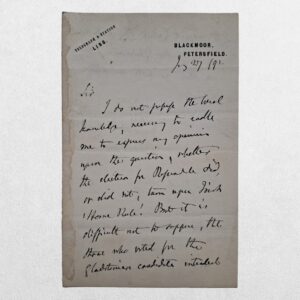
Autograph Letter Signed (“Selborne”) concerning Irish Home Rule and and the General Election of 1892 – Blackmoor, Petersfield – 27 July 1892
£95.00SELBORNE, Roundell Palmer, 1st Earl of Selborne (1812–1895)
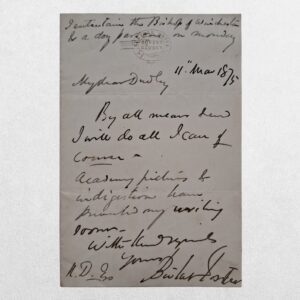
FOSTER, Myles Birket Foster (1825–1899) – Autograph Letter Signed to “Dudley” – 11 March 1875.
£60.00FOSTER, Myles Birket (1825–1899)
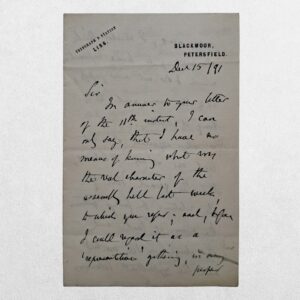
Autograph Letter Signed (“Selborne”) concerning agricultural labourers, landlords and the rural clergy – Blackmoor, Petersfield – 15 December 1891
£95.00SELBORNE, Roundell Palmer, 1st Earl of Selborne (1812–1895)
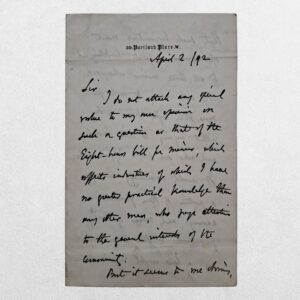
Autograph Letter Signed “Selborne” concerning the Eight Hours Bill for Miners – 30 Portland Place, W. – 2 April 1892
£95.00SELBORNE, Roundell Palmer, 1st Earl of Selborne (1812–1895)
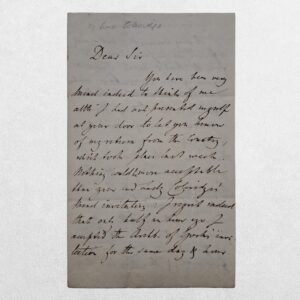
Autograph Letter Signed (“Bunsen”) to Sir John Taylor Coleridge, 28 Hertford Street, London – c. 1840s–1850s)
£250.00BUNSEN, Christian Karl Josias, Baron von Bunsen (1791–1860)

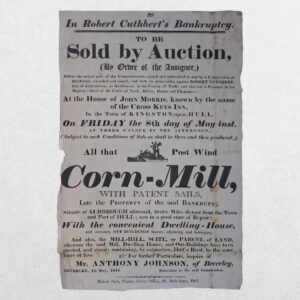
ALDBROUGH CORN MILL – Rare Regency Yorkshire Broadside Advertising the Sale by Auction of the Historic Aldbrough Windmill – Hull, 1818
£225.00[CUTHBERT, Robert.] Johnson, Anthony & Peck, Robert
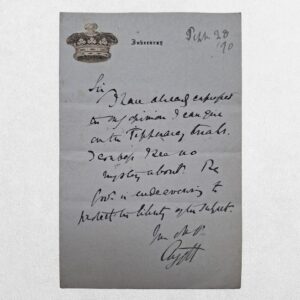
(IRELAND) Autograph Note Signed (“Argyll”) concerning the Tipperary Trials and Irish Government policy – Inveraray – 28 September 1890
£95.00ARGYLL, George Douglas Campbell, 8th Duke of Argyll (1823–1900)
Autograph Letter Signed (“Selborne”) concerning Irish Home Rule and and the General Election of 1892 – Blackmoor, Petersfield – 27 July 1892
£95.00SELBORNE, Roundell Palmer, 1st Earl of Selborne (1812–1895)
FOSTER, Myles Birket Foster (1825–1899) – Autograph Letter Signed to “Dudley” – 11 March 1875.
£60.00FOSTER, Myles Birket (1825–1899)
Autograph Letter Signed (“Selborne”) concerning agricultural labourers, landlords and the rural clergy – Blackmoor, Petersfield – 15 December 1891
£95.00SELBORNE, Roundell Palmer, 1st Earl of Selborne (1812–1895)
Autograph Letter Signed “Selborne” concerning the Eight Hours Bill for Miners – 30 Portland Place, W. – 2 April 1892
£95.00SELBORNE, Roundell Palmer, 1st Earl of Selborne (1812–1895)
Autograph Letter Signed (“Bunsen”) to Sir John Taylor Coleridge, 28 Hertford Street, London – c. 1840s–1850s)
£250.00BUNSEN, Christian Karl Josias, Baron von Bunsen (1791–1860)